Showing posts with label Direct Swap. Show all posts

Thursday, 12 November 2015

Mount Etna, Italy


Mount Etna

Mount Etna is an iconic site encompassing 19,237 uninhabited hectares on the highest part of Mount Etna, on the eastern coast of Sicily. Mount Etna is the highest Mediterranean island mountain and the most active stratovolcano in the world. 

The eruptive history of the volcano can be traced back 500,000 years and at least 2,700 years of this activity has been documented. The almost continuous eruptive activity of Mount Etna continues to influence volcanology, geophysics and other Earth science disciplines. 

The volcano also supports important terrestrial ecosystems including endemic flora and fauna and its activity makes it a natural laboratory for the study of ecological and biological processes. The diverse and accessible range of volcanic features such as summit craters, cinder cones, lava flows and the Valle de Bove depression have made the site a prime destination for research and education.


Monday, 1 December 2014

Melaka and George Town, Historic Cities of the Straits of Malacca


Melaka and George Town, Historic Cities of the Straits of Malacca

Melaka and George Town, historic cities of the Straits of Malacca have developed over 500 years of trading and cultural exchanges between East and West in the Straits of Malacca. The influences of Asia and Europe have endowed the towns with a specific multicultural heritage that is both tangible and intangible. 


With its government buildings, churches, squares and fortifications, Melaka demonstrates the early stages of this history originating in the 15th-century Malay sultanate and the Portuguese and Dutch periods beginning in the early 16th century. 

Featuring residential and commercial buildings, George Town represents the British era from the end of the 18th century. The two towns constitute a unique architectural and cultural townscape without parallel anywhere in East and Southeast Asia.


Saturday, 4 October 2014

Fort Zeelandia , Suriname

Paramaribo is a former Dutch colonial town dating from the 17th and 18th centuries planted on the Northeastern coast of tropical South America. Composed of mainly wooden buildings, the plain and symmetrical architectural style illustrating the gradual fusion of Dutch and other European architectural and later North American influences as well as elements from Creole culture, reflects the multi-cultural society of Suriname. 

The historic inner city is located along the left bank of the Suriname River and is defined by the Sommelsdijkse Kreek to the north and the Viottekreek to the south. Laid out from 1683 on a grid pattern along an axis running north-west from Fort Zeelandia, the main streets follow shell ridges which provided a naturally drained base for building. At the end of the 18th century, Dutch engineering and town planning skills enabled the town to be extended over marshy land to the north. 

Important elements in the townscape are Fort Zeelandia built in 1667 and the large public park (Garden of Palms) behind it, wide, tree-lined streets and open spaces; the Presidential Palace (1730) built in stone but with a wooden upper floor, the Ministry of Finance (1841) a monumental brick structure with classical portico and clock tower, the Reformed Church (1837) in Neoclassical style, and the Gothic Revival Roman Catholic Cathedral (1885) built in wood.


Thursday, 18 September 2014

Antigua, Guatemala


Antigua, Guatemala (Spanish pronunciation: [anˈtiɣwa ɣwateˈmala]) (commonly referred to as just Antigua or la Antigua) is a city in the central highlands of Guatemala famous for its well-preserved Spanish Baroque-influenced architecture as well as a number of ruins of colonial churches. It served as the capital of the Kingdom of Guatemala. It has been designated a UNESCO World Heritage Site.

Antigua, Guatemala serves as the municipal seat for the surrounding municipality of the same name. It also serves as the departmental capital of Sacatepéquez Department.


Thursday, 28 August 2014

Berat, Albania

Berat is a city and a municipality located in south-central Albania, and the capital of the County of Berat. In July 2008, the old town (Mangalem district) was inscribed on the UNESCO World Heritage List. The municipality was formed at the 2015 local government reform by the merger of the former municipalities Berat, Otllak, Roshnik, Sinjë and Velabisht, that became municipal units. The seat of the municipality is the city Berat.The total population is 60,031 (2011 census), in a total area of 379.98 km2. The population of the former municipality at the 2011 census was 32,606.


Monday, 2 December 2013

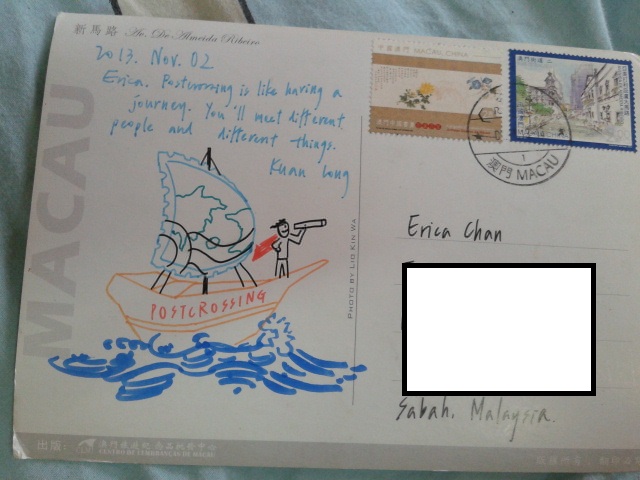
Historic Centre of Macao


The Historic Centre of Macao, also known as the Historic Centre of Macau (Chinese: 澳門歷史城區; Portuguese: O Centro Histórico de Macau), is a collection of over twenty locations that witness the unique assimilation and co-existence of Chinese and Portuguese cultures in Macau, a former Portuguese colony. It represents the architectural legacies of the city's cultural heritage, including monuments such as urban squares, streetscapes, churches and temples.


In 2005 the Historic Centre of Macau was inscribed on the UNESCO World Heritage List, making it the 31st designated World Heritage site in China. It was described by UNESCO as: "with its historic street, residential, religious and public Portuguese and Chinese buildings, the historic centre of Macao provides a unique testimony to the meeting of aesthetic, cultural, architectural and technological influences from East and West," and "...it bears witness to one of the earliest and longest-lasting encounters between China and the West, based on the vibrancy of international trade.


Thursday, 24 October 2013

Giant's Causeway and Causeway Coast, UK


Giant's Causeway and Causeway Coast

The Giant's Causeway lies at the foot of the basalt cliffs along the sea coast on the edge of the Antrim plateau in Northern Ireland. It is made up of some 40,000 massive black basalt columns sticking out of the sea. The dramatic sight has inspired legends of giants striding over the sea to Scotland. Geological studies of these formations over the last 300 years have greatly contributed to the development of the earth sciences, and show that this striking landscape was caused by volcanic activity during the Tertiary, some 50–60 million years ago.


Thursday, 12 September 2013

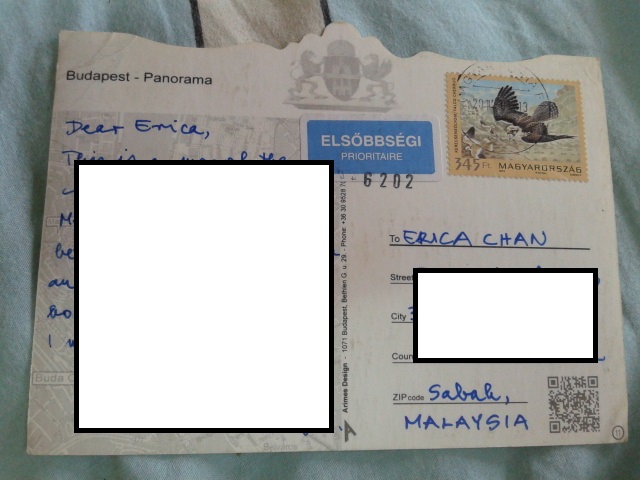
Budapest, Hungary


Budapest, including the Banks of the Danube, the Buda Castle Quarter and Andrássy Avenue, holds a number of influential constructions from the Middle Ages to the late 19th century.

The Budapest World Heritage Site consists of three parts:
1. Buda Castle Quarter
This holds the city's medieval sites, with Buda Castle. Also there are the remains of the original Roman town Aquincum.

2. Banks of the Danube
This includes the Parliament (1884-1904) and the suspension bridge (1849).

3. Andrássy Avenue
The extension with Andrássy Avenue in the year 2000 included the Opera, Millennium Park and the Underground Railway.

Thursday, 25 October 2012

Nessebar, Bulgaria


Nesebar (often transcribed as Nessebar and sometimes as Nesebur, Bulgarian: Несебър, pronounced [nɛˈsɛbɐr], Thracian:Melsambria, Greek: Μεσημβρία, Mesembria) is an ancient town and one of the major seaside resorts on the Bulgarian Black Sea Coast, located in Burgas Province. It is the administrative centre of the homonymous Nesebar Municipality. Often referred to as the "Pearl of the Black Sea", Nesebar is a rich city-museum defined by more than three millennia of ever-changing history.

It is one of the most prominent tourist destinations and seaports on the Black Sea, in what has become a popular area with several large resorts—the largest, Sunny Beach, is situated immediately to the north of Nesebar.

Nesebar has on several occasions found itself on the frontier of a threatened empire, and as such it is a town with a rich history. The ancient part of the town is situated on a peninsula (previously an island) connected to the mainland by a narrow man-madeisthmus, and it bears evidence of occupation by a variety of different civilisations over the course of its existence. Its abundance of historic buildings prompted UNESCO to include Nesebar in its list of World Heritage Sites in 1983.


Monday, 13 August 2012

Paphos, Cyprus


Paphos /ˈpæfɒs/ (Greek: Πάφος [ˈpafos]; Turkish: Baf) is a coastal city in the southwest of Cyprus and the capital of Paphos District. In antiquity, two locations were called Paphos: Old Paphos[2] and New Paphos.[3] The currently inhabited city, New Paphos, lies on the Mediterranean coast, about 50 km (31.07 mi) west of Limassol (the biggest port on the island), which has an A6 highway connection. Paphos International Airport is the country's second-largest airport.

Near Palaepaphos (Old Paphos) at the seaside of Petra tou Romiou is the modern mythical birthplace of Aphrodite, theGreek goddess of love and beauty, and the founding myth is interwoven with the goddess at every level, so that Old Paphos became the most famous and important place for worshipping Aphrodite in the ancient world. In Greco-Roman times, Paphos was the island's capital, and it is well known for the remains of the Roman governor's palace, where extensive, finemosaics are a major tourist attraction. Paul the Apostle visited the town during the first century AD. The town of Paphos is included in the official UNESCO list of cultural and natural treasures of the world's heritage.


Template by:

Free Blog Templates